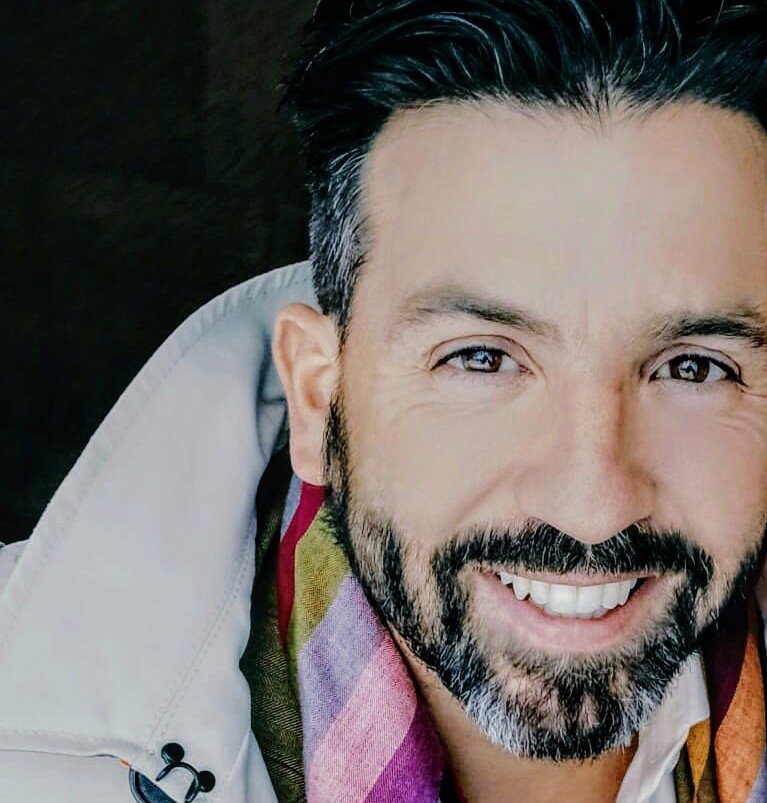

More compelling insights into the world of acting with the unique and wonderful Stansted Players, playing a small role in a production of THE LIARS by the deservedly little known dramatist Henry Arthur Jones. Eight part songs - by the likes of Finzi, Balfour Gardner, Gilbert & Sullivan etc - were inserted into the heavily truncated text. The production was devised by the miraculous Alastair Langlands and led by Jessica Price as the unhappily married Lady Jessica, with Dan Rasbash as her young paramour, Ned. (I played George, a busybody.)

Warren Clarke, John Duttine (hooded) and Anthony Bate in Alan Clarke’s PSY-WARRIORS (1981)
I wrote about the queasily prescient BELOVED ENEMY and PSY-WARRIORS for Reverse Shot. Trump-Putin, Reagan’s Star Wars program, Abu Ghraib…all unwittingly evoked by Clarke and Leland’s uncompromising work.

“Le Samouraï presents us not for the first time with a fully interiorized, “locked-in” Melville protagonist, like Bob in Bob le flambeur or Maudet in Magnet of Doom (1963), but one whose loneliness and single-mindedness are mechanized and supercharged. This object explicitly demonstrates his corresponding ability to unlock, infiltrate, and destroy the lives of others.”
You can read the essay - part of Reverse Shot's symposium on objects in cinema - here


Interview with Aïcha Macky, director of ZINDER (Niger, 2021)
I was privileged to be asked to act as interpreter for the Nigerien filmmaker Aïcha Macky and the Malagasy filmmaker Michaël Andrianaly when they were interviewed by Edo Choi for the presentation of their films (respectively, ZINDER and NOFINOFY) on the first weekend of MOMI’s 2021 First Look Festival.
Both films can be viewed in the links below:
Director: Aicha Macky. Camera: Julien Bossé. Editor: Karen Benainous. Music: Dominique Peter. Production: (Documentary – France-Niger-Germany) A Point du Jour, Les Films du Balibari, Tabous Production, Corso Film, Arte France presentation. (World sales: Andana Films, Lussas.) Producers: Clara Vuillermoz, Ousmane Samassekou, Erik Winker.
Reviewed in Variety by Guy Lodge: https://variety.com/2021/film/reviews/zinder-review-1234952400/
Director: Michaël Andrianaly. Camera: Michaël Andrianaly. Editor: Denis Le Paven. Music: Nonoh Romaro. Production: (Documentary – Madagascar-France) Producer: Sylvie Plunian

I was interviewed by AlAraby TV on Orson Welles’s radio output and its influence on his films (which was enormous). A short clip is at 22.30 here.


“But revenge is intrinsic to cinematic storytelling because it represents our most primal human expression of justice. Eastwood ultimately gives us, his audience, what we have always come to expect from the Man with No Name. In so doing he confronts us—without judging us—with the inherent moral deficit of the western genre and of the movies themselves: their natural, instinctive reliance on violence as entertainment, when violence is the ruin of everyone.”
I wrote about Clint Eastwood’s 1992 western masterpiece, UNFORGIVEN, from an outsider’s point of view, for Reverse Shot’s foreign culture symposium: “Great Beyond”.

Jeff Reichert and Farihah Zaman put together a film using contributions from the participants in this symposium, held before lockdown in the main theatre of the Museum of the Moving Image. It’s called “Critical Interventions” and examines in a multi-mediatic way the reasons one is moved to write criticism.

I was thrilled to be invited onto Reverse Shot’s Happy Hour to discuss my favourite two subjects: Orson Welles being libelled again and that most discredited genre - biopics. Great to share an hour with special friends and collaborators Michael Koresky, Farihah Zaman, Jeff Reichert, Aliza Ma and Eric Hynes.


“Like a bookkeeper filling an addict’s account with free bets just as the addict is ready to go cold turkey, Scratch introduces the enchantress Belle as Jabez’s housemaid (the French actress Simone Simon, who would catch fire the following year in Jacques Tourneur’s Cat People), while a simple handshake—call it a free rider—extinguishes Jabez’s nagging conscience. He spends the rest of the time rubbing his affair with Belle in his wife’s face, while poor Mary tends to the upbringing of their troubled, nascent Donald Trump Jr. of a son.”
Read the entire piece here. Happy Halloween! (And please vote).

I was thrilled to be asked to translate a section of the new film from Jeff Reichert, Damon Smith and Eric Hynes: ROOM H.264: QUARANTINE, APRIL 2020. The film can be watched here.

NOFINOFY (Michael Adrianaly, 2020, Madagascar)

I wrote about Jean-Marie Straub’s uniquely powerful concert film THE CHRONICLE OF ANNA MAGDALENA BACH for Reverse Shot’s Connected feature. RS legend, Toronto-based film teacher and writer Adam Nayman wrote about Documentary Now!’s ORIGINAL CAST ALBUM: CO-OP
It’s always enormous fun to team up with Adam Nayman. Our Lego Movie discussion from 2014 can be found here.


I was privileged to spend the day with some of the finest young film writers, discussing - in an active and multi-mediatic way - the reasons why we write film criticism.
This event was programmed by Head Curator Eric Hynes and animated by the Reverse Shot editorial team of Jeff Reichert and Michael Koresky with the help of Jeff’s filmmaking collaborator and Reverse Shot contributor, Farihah Zaman.


As print magazines become fewer and further between, the cream rises to the top and Film Comment magazine is a centre of excellence. It’s a huge honour to be asked to write for them and in the latest edition I contributed to their Finest Hour series, writing about Isabelle Huppert in Maurice Pialat’s LOULOU (1980)

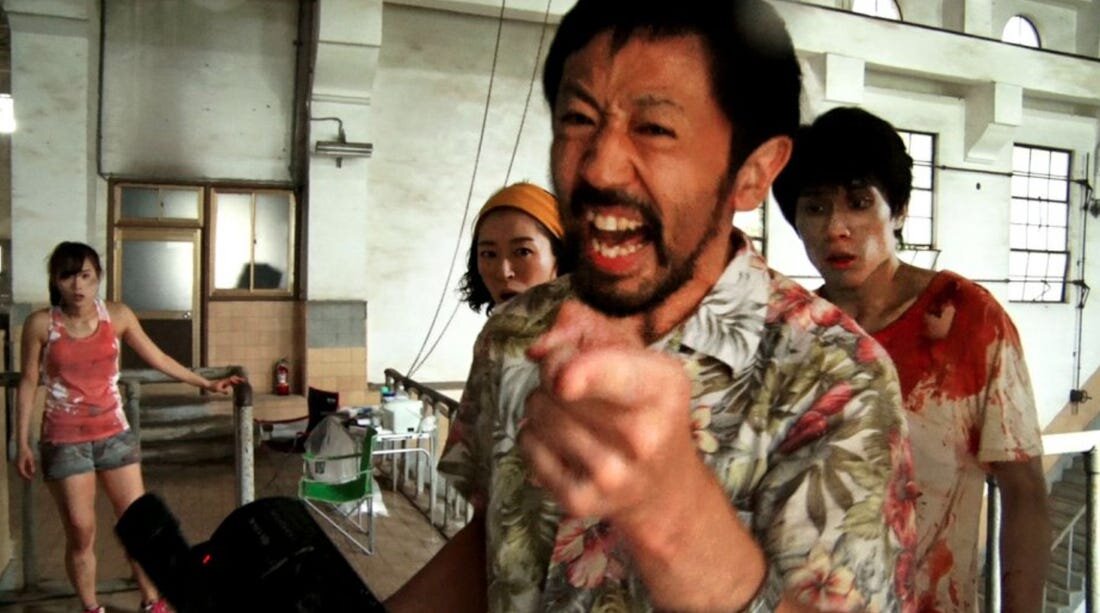
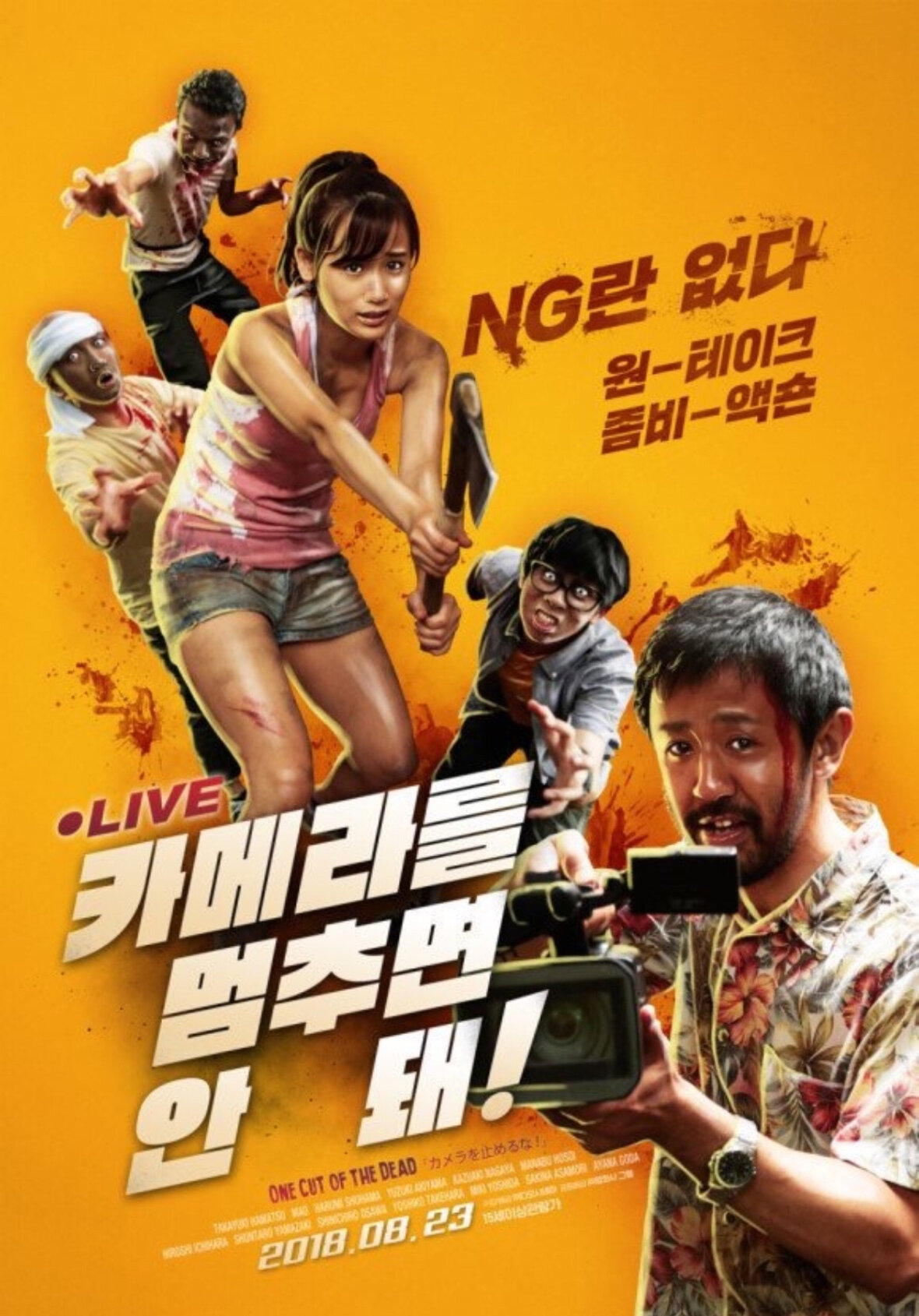
I provided commentary on two lovely films of 2019 for Reverse Shot’s annual round up of things we missed (2019 - Two Cents): Greta Gerwig’s terrific adaptation of Little Women and the ‘best film of 2019’, Shin'ichirô Ueda’s One Cut of the Dead.
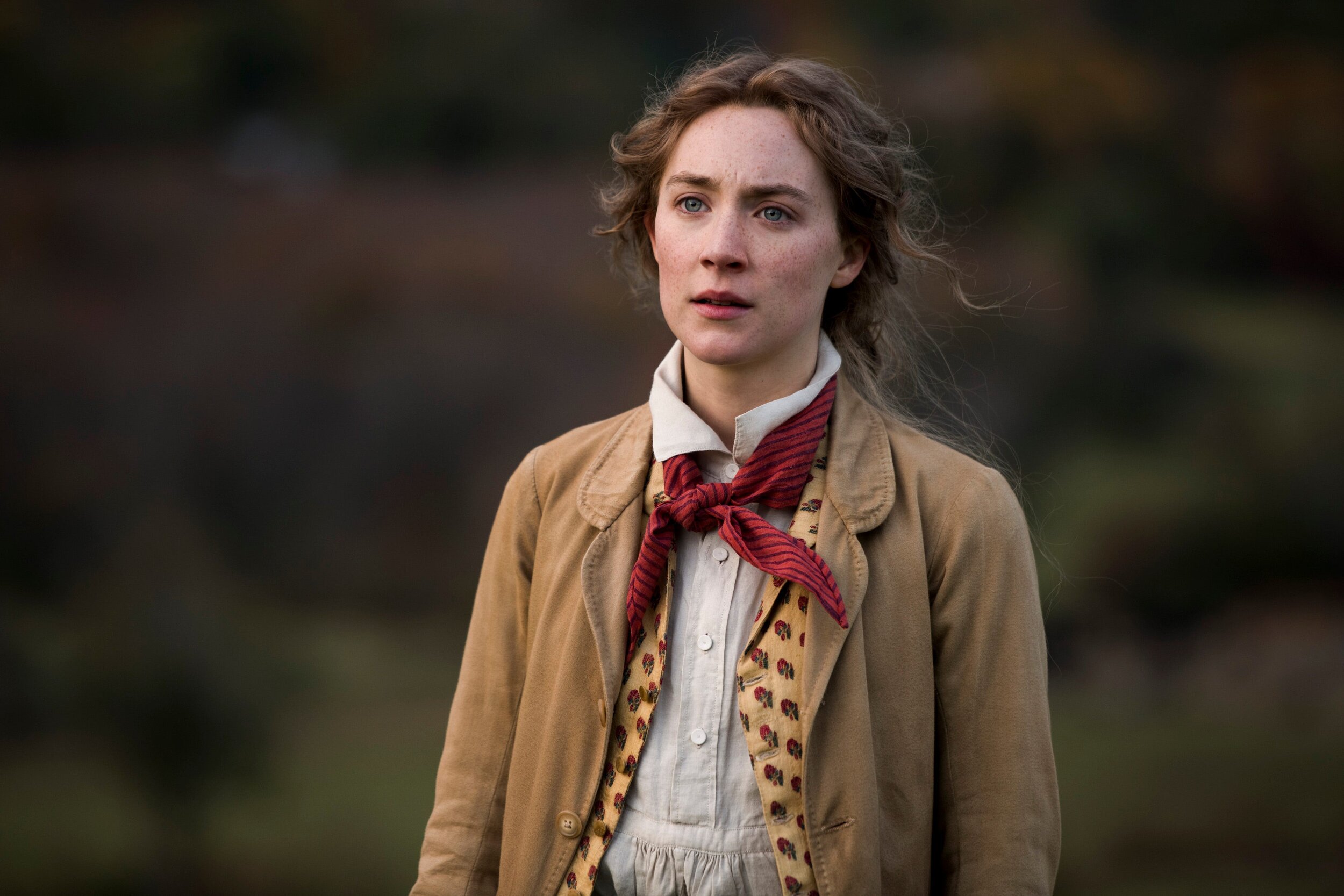
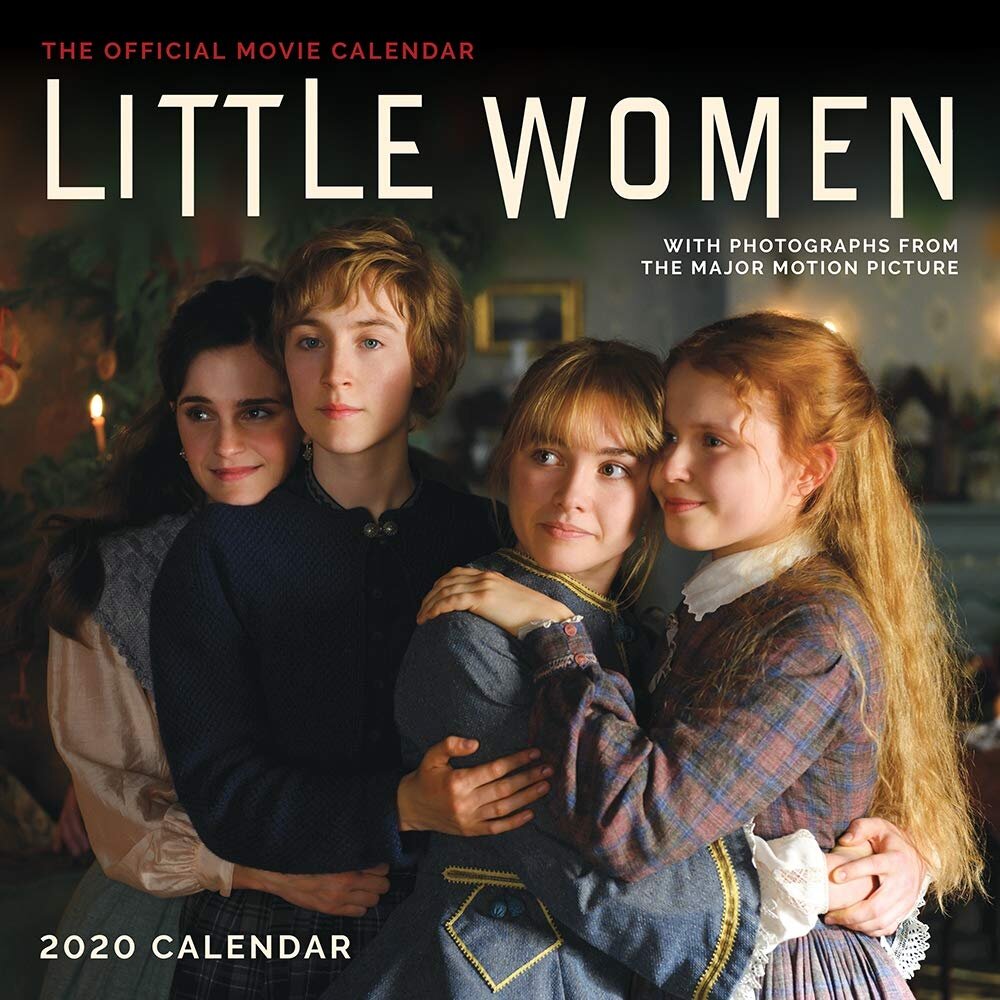
“Best Aging Effects: Little Women
Both Eliza Scanlen and Timothée Chalamet were cast for their resemblance to young girls; Amy (Florence Pugh) is transformed from a hormonal free spirit to a poised woman of the world purely through immaculate physical performance; the extended use of close-ups on the later period Jo (Saoirse Ronan) emphasizes Yorick Le Saux's deft lighting nuances; and if you think you spotted a touch of grey in luminescent matriarch Laura Dern's hair, I put it to you that this is pure projection. The poster tagline for The Irishman was “Time Changes Nothing.” Well...yes and no.”
“Best Film of 2019 (in 20 years time): One Cut of the Dead
This zero-budget guerrilla zombie comedy from Japan's Shin'ichirô Ueda is actually not a zero-budget guerrilla zombie comedy at all. Ueda credits his audience with supreme cinematic sophistication and then predicts our every reaction in advance: he hacks the fourth wall to pieces, builds a fifth, and incinerates that too. Disgusting, hilarious, bewildering, terrifying, and beyond poignant, it combines elements of Marker, Antonioni, and Chaplin without having been obviously influenced by any of them. And it’s a stone-cold, unequivocal masterpiece. But you don't know this yet. You will know this in twenty years time when we've all finally managed to get our heads around it. I just hoped I could be the one who told you this first.”

It was a pleasure to translate some Abel Gance materials for Alex Heller-Nicholas, a noted Melbourne-based film critic and horror expert.


Romane and I were guests of Jeff Reichert (producer of the Netflix film AMERICAN FACTORY, which was nominated for both the BAFTA and Academy Award for Best Documentary). We had a swell time, especially Romane who strode up to the likes of Adam Driver and Rian Johnson and talked their ears off. I was polite to Jenna Coleman but not chatty, which left her perplexed (Romane bailed me out on that one too). Mark Kermode wasn’t allowed in straight away but we had a chance to catch up when he was!

“Kiarostami is not an angry filmmaker; he is not even a very emotional one (he once told a French journalist he had never once cried in the cinema). He is, like Takashi, serene. He would not conceive of using his work as a form of activism. The irony of his ostracization by the authorities in his home country of Iran—an irony so profound that it would be amusing if the circumstances were not so deplorable—is that neither he nor his films ever attacked the Iranian government, its ideology, nor the enforced lifestyle of its inhabitants. In an echo of (fellow painter) Eisenstein’s artistic dilemma, Kiarostami’s austere, limpid life stories were banned because they were so artfully and subtly presented, and by trusting the audience’s imagination they left so much unexplained, that the authorities did not understand them. So, they reasoned, they must be subversive.”
I was thrilled to contribute this essay on one of the most luminous films of the 2010s. Number 18 on Reverse Shot’s ‘Best of the Decade’ poll: LIKE SOMEONE IN LOVE.
“Booth (Brad Pitt), the calmest powder keg you'll ever see, is the film's heart of darkness. He bears witness from his vantage point on Rick’s roof, then at Spahn Ranch he participates, becoming Hans Landa (as Samuel L. Jackson did in Django Unchained). And the dream will start to turn sour. More than a love letter, it's a eulogy: Tarantino joins Minnelli, Wilder, and Kazan in enriching the ambiguity of the Hollywood myth. If you think the old Cinema, the type we could all soon be lamenting, still has a purpose and value—to excite, provoke, transport, disturb, and enthrall—then don’t despair: it’s all here.”
A momentous year for the movies and sneaking in at number 10, a masterpiece from Quentin Tarantino. You can read my capsule on the film here.

“The outwardly glamorous trappings hinted at in the film’s publicity materials are occasionally apparent—a pivotal sequence at the Ritz-Carlton; Carol’s fur coat and lipstick; martinis for lunch—but they are etched against the soiled, grainy texture of Lachman’s urban landscape. These images and the disarming skill of the lead performances are all of a piece with Haynes’s meticulousness. Despite Haynes’s embracing the sobriety of Nagy’s script, his predilection for iconography (see I’m Not There and Velvet Goldmine) hasn’t fully deserted him: Blanchett looks like pre-Cassavetes Gena Rowlands, while Mara bears an almost insolent resemblance to Audrey Hepburn in Sabrina. Haynes is unafraid to wear his own artistic inspirations on his sleeve and he encourages his collaborators to buy into them: he ingested and recommended to the cast Roland Barthes’s compendium Fragments of a Lover’s Discourse before shooting, and even produced a bespoke playlist of period music (Ella Fitzgerald, Johnnie Ray, Benny Goodman) for his actors to listen to while developing their characters.”
Click here to read my piece on Todd Haynes’ CAROL for Metrograph cinema on the occasion of its 2019 Christmas run.

I was delighted to sponsor Kennington Bioscope’s screening of E A Dupont’s 1928 silent masteriece, MOULIN ROUGE at The Cinema Museum in Kennington on Wednesday 11 December.
